01
Real service intent
Pages are built around what somebody is actually trying to find, compare or arrange.

Useful local pages should answer real questions for people in the areas you actually serve — not repeat the same town name fifty times.
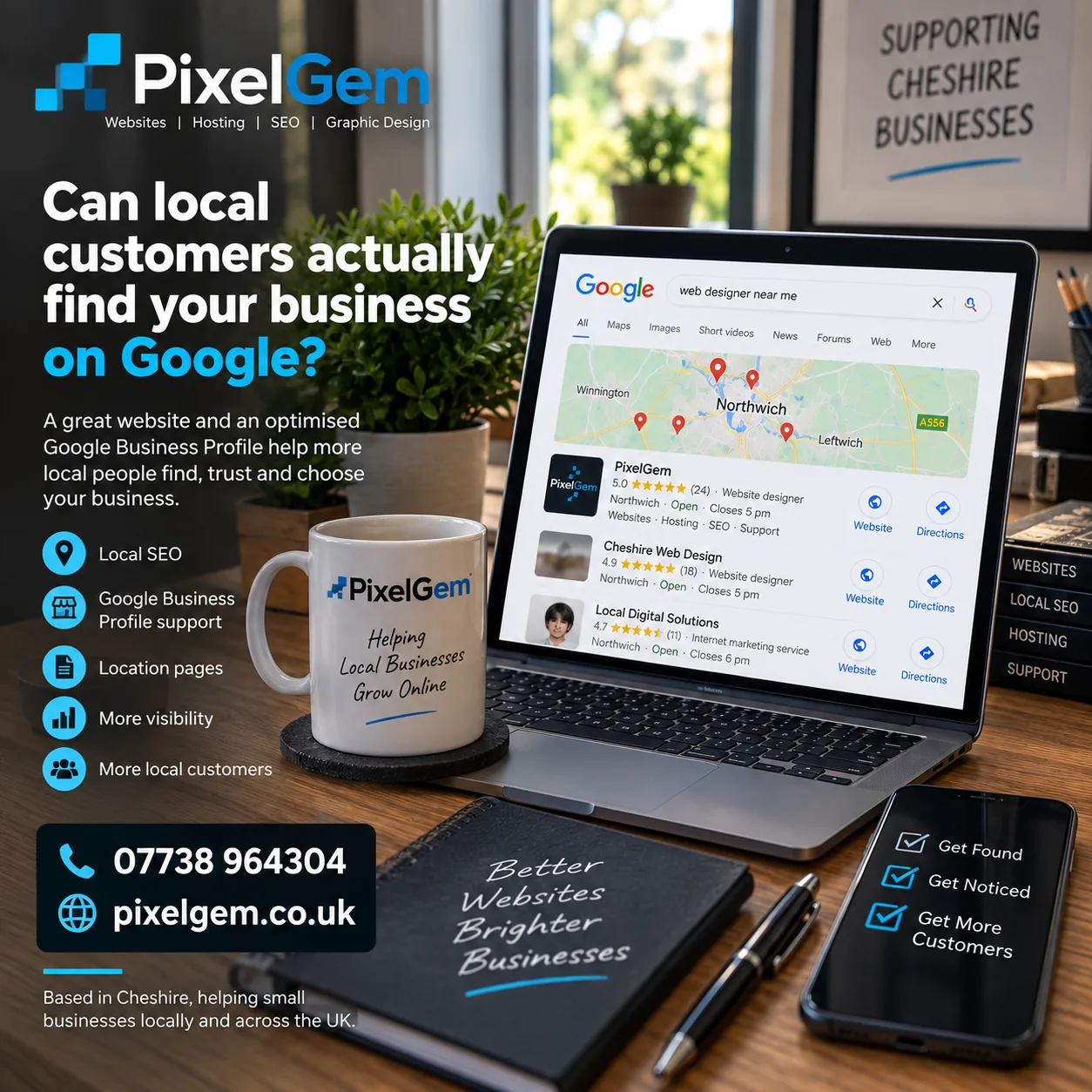
Local pages work best when they reflect real services, real coverage and useful information rather than simply swapping place names.
Pages are built around what somebody is actually trying to find, compare or arrange.
We use towns and areas the business genuinely serves rather than manufacturing a huge footprint.
Local pages connect naturally to services, proof, contact and other genuinely relevant pages.
Search visibility comes from relevance and usefulness; location content should help a real customer, not imitate a doorway page.
Titles, headings and page copy make the service/location relationship easy to understand.
Short direct answers, useful headings and visible business facts help people and answer engines interpret the page.
Real examples and useful local context are stronger than templated paragraphs with town names swapped out.

Map services to genuine areas served, then build only the pages that add real local value and make sense in the wider site structure.
The practical checks that keep local SEO pages useful, credible and tied to genuine service areas.
No. Only create location pages where there is a genuine service-area reason and enough useful content to make the page distinct.
No. Good local SEO is about useful service information, clear geographic relevance, strong business signals and sensible internal links.
Yes. Existing pages can often be made clearer and more useful without changing their URLs.
Tell PixelGem what you sell and where you genuinely work. The right local structure can then be planned without manufacturing thin pages.